

IEA Expects India to Reach 530 GW by 2030: Why BESS Matters
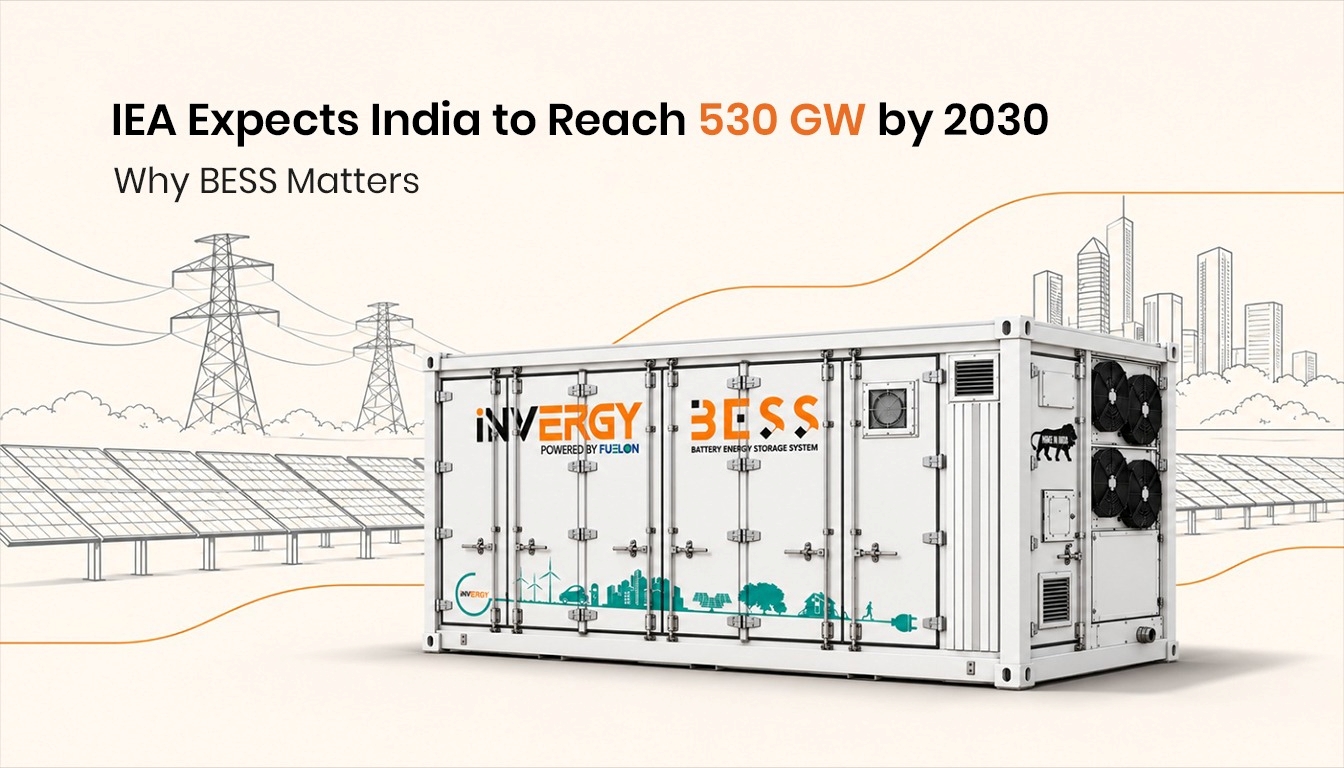
According to the International Energy Agency (IEA) report, India’s renewable energy generation capacity reached 300 GW in 2026, almost quadrupled over the past decade. The IEA forecasts this capacity to reach 530 GW by 2030, up from over 300 GW in 2026.
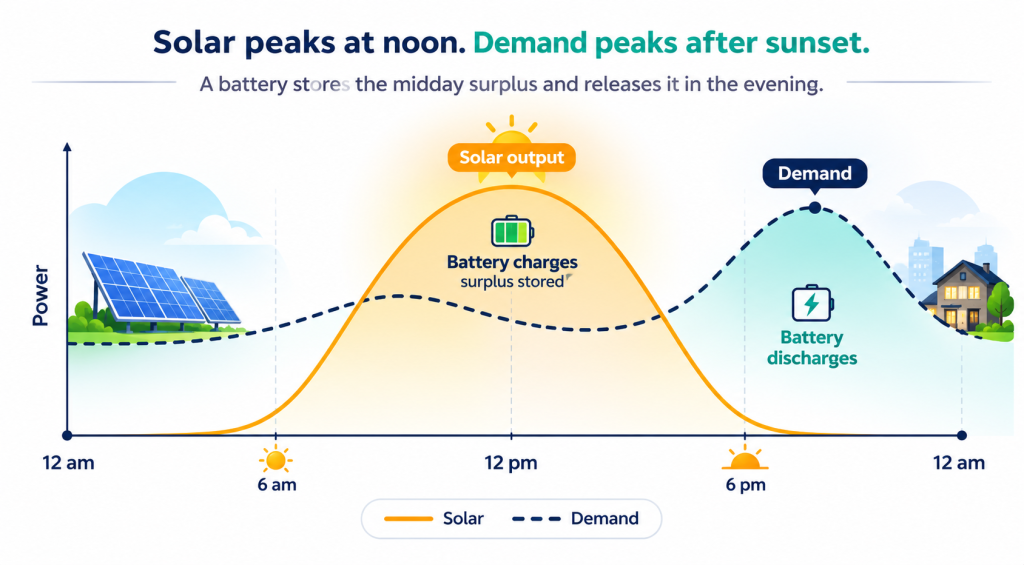
Most of this growth is expected to come from solar power. However, solar output has a timing issue. Solar Plants generate their highest amount of production at midday, and their demand for electricity spikes after the sun sets; not all of this can be delivered by the grid during the day. How India fills that deficit is what will determine the amount of the 530 GW that reaches consumers.
What is the IEA, and why does its report matter for India’s BESS market?
The International Energy Agency (IEA) is an intergovernmental organisation that provides data, research, and policy analysis on global energy markets. Its reports track changes in energy production, consumption, investment, and technology across countries, including the growth of renewable energy and energy storage.
For India’s renewable energy sector, IEA projections offer a broader picture of how quickly solar and wind capacity could expand and what infrastructure will be needed to support that growth. These projections matter for the battery energy storage system (BESS) market because adding more capacity helps with flexible power generation, grid balancing, and energy storage.
For project developers, investors, and energy companies, the IEA’s outlook helps identify where future storage demand may emerge. It also provides useful context for understanding why BESS is becoming an important part of India’s renewable energy infrastructure.
What does the IEA report say about India’s renewable future?
The IEA’s forecast of 530 GW is in addition to the government’s 500 GW of non-fossil capacity by 2030. The main projections:
- Solar PV represents over 80% of new capacity and crosses the 350 GW mark.
- Wind approaches 90 GW (with hydropower reaching around 75 GW).
- Renewables’ share of India’s electricity supply rises to roughly 35% by 2030, up from about a quarter in 2025.
- Corporate PPAs and competitive auctions are supporting renewable energy growth, accounting for roughly 20% of recent utility-scale additions. However, most standard utility-scale projects in India still rely on long-term PPAs with government agencies such as SECI and state DISCOMs.
The report also identifies factors that may limit this. These range from land and permitting, project delays, distribution company balance sheets, and investment in the grid and storage to accommodate variable power.
Why is grid readiness falling behind solar capacity?
According to Ember’s May 2026 analysis, India lost around 300 GWh of renewable electricity in the first quarter of 2026 because of storage and transmission constraints. The Northern region accounted for 178 GWh of these losses, while the Western region accounted for 122 GWh. The Southern region recorded no transmission-related curtailment during this period.
The problem was particularly visible on 30 March 2026, when India lost 34 GWh of clean electricity in a single day. According to Ember, this amount could have met the daily electricity needs of around 5 million urban middle-class households. These figures highlight a growing gap between renewable energy generation, storage, and the transmission infrastructure needed to deliver that electricity to consumers.
Rating agency ICRA adds that 40 to 45 GW of awarded renewable capacity was still awaiting signed PPAs as of April 2026.
Building a solar plant is only the first step. For that clean electricity to actually power business and utilities, for a long period of time it requires Battery Energy Storage Solutions (BESS) to store the extra power generated at noon so it can be utilised in the non-generation hours, and for transmitting wires to carry it from the plant to cities & utilities willing to buy it.
Our article on India’s solar boom and grid storage needs covers the transmission side.
Why does this make BESS important for utility-scale solar?
A battery energy storage system (BESS) is a large bank of batteries with its own power conversion and controls. For a solar plant, it does three things:
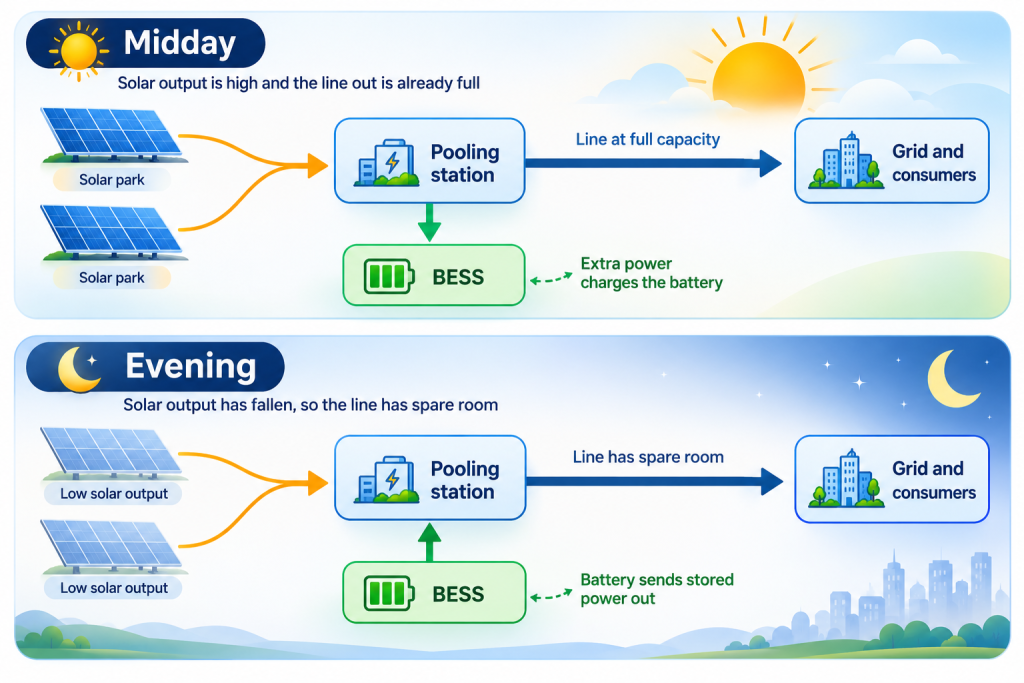
- Stores the surplus when output is higher than the grid can take.
- Shifts it to the evening peak or to periods when generation drops.
- Steadies the grid by responding quickly to short swings in supply and demand.
Where batteries are installed also matters. Placing BESS at renewable polling stations, where power from multiple solar and wind parks enters the transmission network, can help store surplus electricity before it is curtailed. According to the reports, Ember estimates that 3 to 4 GW of two-hour battery storage at these locations could have absorbed most of the renewable power curtailed in the first quarter of 2026.
See also how BESS improves solar plant efficiency and the role of BESS in smart grids.
What does this mean for India’s utility-scale solar and BESS market?
Solar energy Storage is moving from an add-on to an important part of project planning. As renewable energy capacity grows, developers must consider storage size, project economics, and grid connectivity together.
Growing electricity demand from AI and data centres is adding another dimension to the global energy challenge. According to the IEA’s World Energy Outlook 2026, global data centre electricity consumption is expected to double by 2030, while emissions associated with the sector are projected to rise by 70%. The growing reliance on natural gas and coal to meet this demand highlights the need for cleaner, reliable power sources. Battery energy storage can help integrate renewable electricity and support more flexible power supply for energy-intensive facilities.
Corporate buyers increasingly need electricity during specific hours, not just when solar generation is at its peak. Battery energy storage can help bridge this gap by storing surplus solar power for use when demand is higher. The 2026 captive power rules also create opportunities for combining solar and storage in captive power projects.
However, not every solar plant needs a battery. The decision depends on grid connectivity, power sale agreements, electricity demand patterns, and the project’s overall design.
Renewable growth needs storage alongside generation
India’s 530 GW outlook is a large opportunity for solar, but capacity only counts when the power can be used. BESS helps by storing surplus generation, supporting grid flexibility, and making solar power available when it is needed.
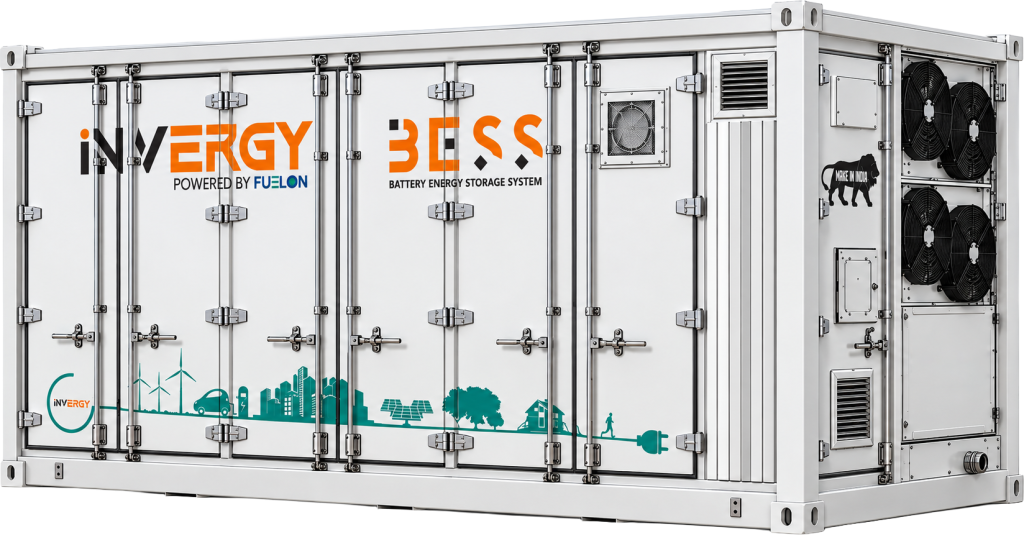
INVERGY’s utility BESS range is built for grid stability, renewable integration, and peak demand management.
Read more about the INVERGY 3 GWh BESS giga factory in Uttar Pradesh.
Planning storage for a solar project?
Talk to our Solar Expert to explore energy storage options for your site.
Invergy