

BESS vs Hybrid Inverter: Key Differences & Which One Is Better?
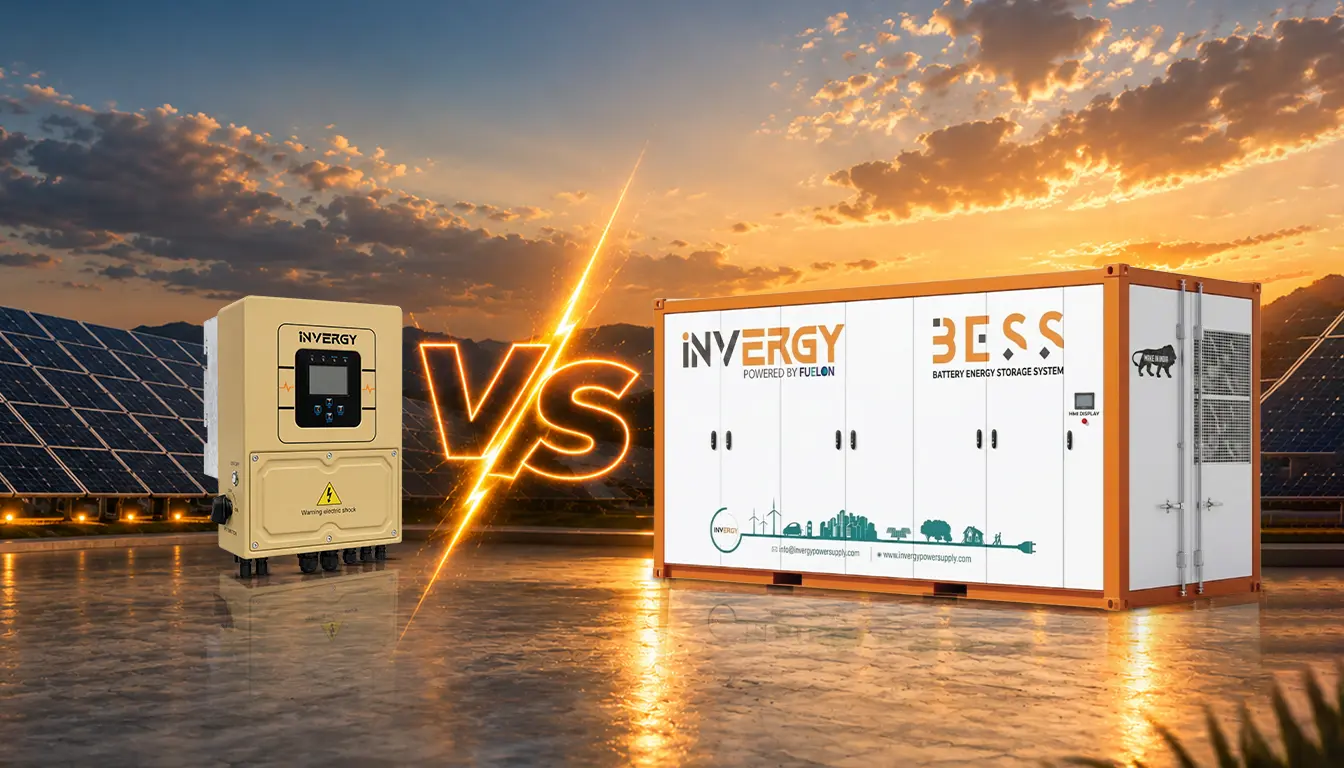
In today’s fast-changing energy world, storing energy well is key. With more people using electricity, finding ways to use and save it is vital. This article compares Battery Energy Storage Systems (BESS) and hybrid inverter solar systems. We look at their features and benefits to show their importance in today’s solar energy storage.
Key Takeaways
- Energy storage solutions are essential for effective energy management.
- BESS provides a dedicated system for storing energy for later use.
- Hybrid inverter solar combines solar energy generation with energy storage.
- Understanding the key differences aids in choosing the right technology.
- Both systems have unique benefits tailored to residential and industrial applications.
- The significance of these solutions is specially relevant in energy-demanding regions.
Introduction to Energy Storage Solutions
Energy storage solutions are key to balancing energy use and production in India. With more solar and wind power, the need for good storage systems grows. These systems help solve problems like unstable grids and the ups and downs of renewable energy.
Using new tech like Battery Energy Storage Systems (BESS) and hybrid inverters helps use energy better. It makes power more reliable. These steps make energy use more efficient and help create a green future for India’s growing power needs.
Understanding BESS and Its Components
A Battery Energy Storage System (BESS) is a key solution for storing energy, mainly in commercial and industrial areas. It helps manage electricity from renewable sources or the grid. This ensures backup and reliable energy distribution when needed.
What is BESS?
BESS, or Battery Energy Storage System, stores electrical energy for later use. It’s vital for balancing energy supply and demand, helping with renewable sources like solar or wind. BESS improves grid stability and boosts energy efficiency, making it essential for modern energy management.
To explore leading players in the Indian market, check out our detailed list of the top BESS companies in India.
Top 10 Battery Energy Storage System (BESS) Companies in India (2025)
Key Components of a BESS
The BESS has several key parts for its effectiveness and reliability:
- Lithium-Ion Batteries: The core component for storing energy efficiently.
- Battery Management System (BMS): Monitors battery performance, ensuring safety and longevity through real-time monitoring.
- Power Conversion System (PCS): Converts stored energy into usable forms, managing electricity flow between the battery and the grid.
- Energy Management System (EMS): Optimizes energy usage and storage, coordinating all elements to enhance system efficiency and performance.
How a BESS Works
A BESS works by continuously charging and discharging. When demand is low, it stores excess energy in batteries. The energy management system directs energy flow efficiently, ensuring availability when needed. This reliability is key for users needing a consistent power supply from their BESS.
| Component | Function |
|---|---|
| Lithium-Ion Batteries | Energy storage |
| Battery Management System | Performance monitoring and safety |
| Power Conversion System | Energy conversion and distribution |
| Energy Management System | Optimization of energy flow |
Defining Hybrid Inverter Solar Systems
A hybrid inverter is key in today’s energy management, mainly in solar systems. It combines solar energy with battery integration. This combo boosts energy storage and use efficiency in homes and small businesses.
What is a Hybrid Inverter?
A hybrid inverter does more than just convert solar energy. It also stores extra energy in batteries. This lets users use stored energy during peak hours or when the power goes out. It makes the most of renewable energy, cutting down electricity costs.

Key Features of Hybrid Inverters
Hybrid inverters have features that make them stand out. Some of these include:
- Energy Management Capabilities: They can smartly choose when to use solar, battery, or grid power.
- Backup Power Functionalities: If the grid fails, they switch to battery power, keeping electricity flowing.
- Grid Independence: They allow users to use less grid power, making energy use more secure.
Choosing a hybrid inverter solar system helps manage energy well. It cuts down on traditional energy use and keeps power on.
BESS vs Hybrid Inverter Solar: Key Differences
When we compare BESS (Battery Energy Storage Systems) to hybrid inverter solar systems, we see key differences. These include cost, scalability, and efficiency. These factors are important when choosing an energy solution.
Cost Analysis
The cost of BESS and hybrid inverters varies. BESS might cost more upfront because of the complex battery systems. But, hybrid inverters are cheaper for small setups. Here are some things to consider:
- Initial installation costs
- Maintenance needs and costs
- Long-term savings from better energy use
Scalability and Efficiency
BESS is better for big energy needs because it can grow easily. Hybrid inverters work well for small places, saving energy and reducing waste. This shows how each system fits different needs.
Use Cases for Each System
Knowing how each system works helps us see their benefits. BESS is great for big energy needs like factories and renewable farms. Hybrid inverters are best for homes and small businesses, where saving money and being easy to set up matter. Here’s a quick guide:
| Energy System | Typical Applications | Benefits |
|---|---|---|
| BESS | Manufacturing, Renewable Energy Farms | High scalability, large storage capacity |
| Hybrid Inverter | Residential, Small Businesses | Cost-effective, easy installation |
Residential Applications of BESS and Hybrid Inverters
In recent years, BESS and hybrid inverters have become popular in homes. Homeowners want solutions that give them energy independence and help manage energy well.
Benefits of Hybrid Inverters at Home
Hybrid inverters are key in managing home energy today. They offer a power backup solution when the power goes out. This keeps important appliances working.
These inverters also make the most of solar energy. They let homeowners use extra energy right away or store it for later. This helps families save on their electricity bills.
Applications of BESS in Residential Settings
BESS is not just for big energy projects; it works well in homes too. In places with lots of power outages or high energy costs, it helps a lot. It lets homeowners store solar energy for when they need it.
This makes homes more independent from the grid. BESS helps families manage their energy better and be ready for surprises.
Industrial Applications of BESS
Industrial BESS is changing how companies handle their energy. It makes managing energy more versatile and efficient. For example, it helps lower energy costs by managing peak demand.
Peak shaving is another key use. It lets facilities store energy when it’s cheap and use it when it’s expensive. This not only saves money but also makes the grid more reliable.
High-capacity BESS also helps stabilize the grid. It provides backup power during outages, keeping operations running smoothly. This way, industries can save on energy costs and invest in a sustainable future.
| Application | Description | Benefits |
|---|---|---|
| Demand Charge Management | Reduces peak demand charges by utilizing stored energy. | Lower energy costs and improved budget predictability. |
| Peak Shaving | Stores energy during off-peak hours for use in peak hours. | Enhanced cost efficiency and stable energy supply. |
| Grid Stabilization | Provides backup power during outages or irregularities. | Increased operational reliability and reduced downtime. |
Comparison of Scalability in BESS and Hybrid Solutions
Scalability is key in energy storage systems. Both Battery Energy Storage Systems (BESS) and hybrid solutions have unique features. These features help meet different energy needs.
BESS is known for its high scalability. You can add more battery modules as energy needs grow. This makes BESS great for homes and businesses, growing with your energy use.
Hybrid solutions take a different path. They mix solar power with energy storage. This creates a system that can change with your energy use. But, hybrid systems might need a more careful setup because of their complex parts.
Here’s a table comparing BESS and hybrid systems’ scalability:
| Feature | BESS | Hybrid Solutions |
|---|---|---|
| Modularity | High – easy to add more batteries | Moderate – may require more complex integration |
| Installation Flexibility | High – minimal impact on existing structures | Low – dependent on layout and solar component placement |
| Cost of Expansion | Lower initial investment for additional capacity | Potentially higher due to added complexity |
| Speed of Expansion | Quick – straightforward battery additions | Slow – often requires system redesign |
In short, BESS is easy to scale up. But, hybrid systems offer flexibility for specific needs. Knowing these differences helps choose the best energy storage for your situation.
Pros and Cons of BESS
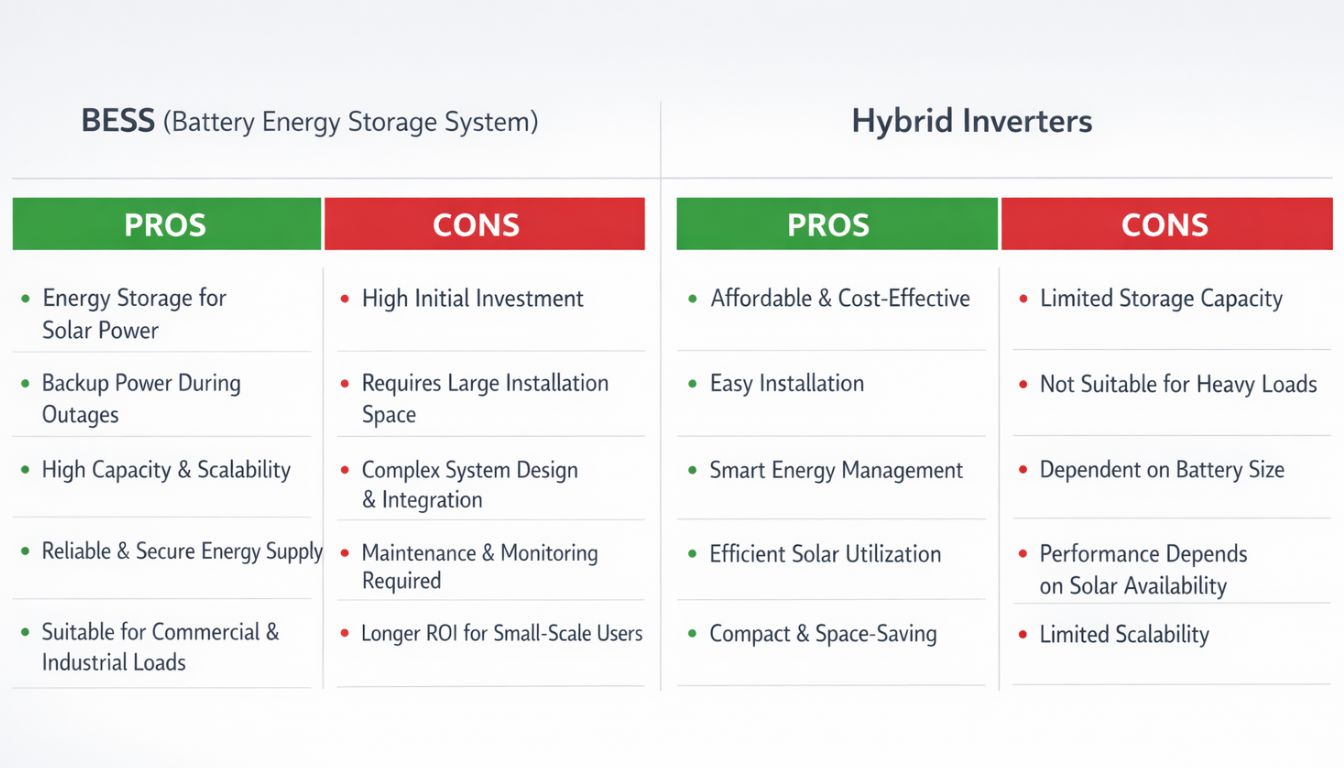
Battery Energy Storage Systems (BESS) have many benefits for both homes and businesses. They can store a lot of energy, which is great for using what you make from solar panels. This makes your energy use more secure.
These systems are also reliable. They can keep the power on even when the grid goes down. This means you always have energy when you need it.
But, there are downsides to consider. Getting a BESS can cost a lot upfront. This might stop some people from getting one. Also, setting it up can be complicated and might need a pro.
Keeping it running right can also be a challenge. You’ll need to check it often and update it to keep it working well. Thinking about these points can help you decide if a BESS is right for you.
Pros and Cons of Hybrid Inverters
Hybrid inverters have many benefits for homes and businesses. They are cheaper to start with than other energy systems. This makes it easier for people to switch to renewable energy without spending a lot.
Setting up hybrid inverters is also easy. They can be installed quickly without big changes to your current setup. This makes it simpler for many to switch to cleaner energy.
They also come with smart technology. This technology helps manage energy use, store battery power, and use more solar energy. It makes your energy use more efficient and green.
But, there are downsides too. Hybrid inverters might not work for big energy needs. Their performance also depends on how much sunlight you get, which can change with weather and location.
It’s important to know both the good and bad sides of hybrid inverters. This helps people make better choices about their energy use. It helps them decide if a hybrid inverter is right for their needs.
Economic Considerations: ROI and Cost Differences
Investing in energy solutions like Battery Energy Storage Systems (BESS) or hybrid inverters can save money in the long run. It’s important to compare the initial cost with the long-term savings. This helps make smart choices about these technologies.
Initial Investment vs Long Term Savings
The cost of energy storage solutions can vary a lot. BESS might cost more upfront but can save a lot on energy bills over time. Hybrid inverters are cheaper but might save differently. Knowing this helps figure out the best investment for saving energy costs.
Financing Options Available
Looking into financing for solar systems is the next step. There are many ways to make the initial cost more manageable. These include:
- Government incentives that lower the cost.
- Loans for solar projects with good interest rates.
- Leasing options that let you use the technology without a big upfront payment.
Choosing the right financing can make a big difference. It’s key to look at all the options carefully.
| Financing Options | Advantages | Considerations |
|---|---|---|
| Government Incentives | Reduces initial investment | Eligibility criteria apply |
| Loans | Competitive interest rates | Repayment terms vary |
| Leasing | Lower upfront costs | Potential long-term payments |
The Growing Need for Energy Storage in India
India’s energy demand is skyrocketing, thanks to fast urban growth and industrial expansion. This rise in energy use makes it vital to have reliable and efficient storage solutions. As India moves towards more renewable energy, it’s key to have good storage systems to balance supply and demand.
India is seeing more investment in energy storage, like Battery Energy Storage Systems (BESS) and hybrid systems. These technologies help manage energy better, mainly during peak hours. They let India use extra solar and wind energy when it’s available, ensuring a steady energy supply even when these sources are scarce.
Good energy storage is essential for keeping the national grid stable and avoiding power cuts. India aims to hit big renewable energy targets, and solving the energy demand issue will need new storage solutions.
Putting money into energy storage systems helps with renewable energy and supports sustainability and climate goals. India is at a critical point where using advanced storage solutions can greatly improve energy reliability and help create a greener future.
iNVERGY: Offer Both BESS & Hybrid Systems

iNVERGY offer a complete way to manage energy. They have both Battery Energy Storage Systems (BESS) and hybrid inverter systems. Clients can find the perfect solution for their energy needs, helping them use energy better.
Website: iNVERGY BESS
Website: iNVERGY Hybrid inverter
Customized Energy Management Solutions
iNVERGY is all about making energy management fit each client’s needs. They look at how much energy each person or business uses. Then, they help choose between BESS and hybrid systems.
This way, customers get the best energy management for their lives or work. It’s all about making energy use efficient and effective.
Scalability for Various Applications
Invergy’s systems are flexible and can grow with you. They work well for homes, small businesses, or big industrial sites. This means clients can manage their energy well, no matter the size of their needs.
It’s all about making energy use better and saving money. Invergy’s systems are designed to be adaptable and cost-effective.
Conclusion
Looking into energy storage shows the good points of BESS and hybrid inverters. Each has special features for different needs. Whether you need better energy use at home or strong support for big projects, there’s a solution.
Knowing about BESS and hybrid inverters is key to making smart choices. They help save energy and are good for the planet. This is very important in places like India, where energy needs are changing fast.
Choosing between BESS and hybrid inverters depends on what you want to achieve. By looking at these options well, you can work towards using less energy and being more independent.
FAQ
What is the difference between a Battery Energy Storage System (BESS) and a hybrid inverter?
A BESS is for big energy storage, used in big places. A hybrid inverter does solar and battery work, good for homes and small businesses.
How does a solar energy storage system work?
It captures extra energy during the day and stores it. Then, it uses that energy when you need it most, helping save power.
Can I use a BESS for my home?
Yes, BESS can be used at home, great for places with power cuts. They help save money on energy bills.
What are the benefits of using a hybrid inverter at home?
Hybrid inverters give backup power, use solar energy well, and manage energy smartly. They help control how much energy you use.
How do I determine which system is more cost-effective for my needs?
Look at the cost to start, upkeep, and how much you save over time. Compare BESS and hybrid inverters based on your energy use and financing options.
What are the scalability options for BESS compared to hybrid systems?
BESS are good for big energy needs. Hybrid inverters are better for homes. Choose based on how much energy you use.
Are there financing options available for installing energy storage systems?
Yes, there are loans, government help, and leasing. These make buying energy storage systems easier for more people.
Why is energy storage becoming increasingly important in India?
India’s energy demand is growing fast. Energy storage helps keep power steady, supports renewable energy, and manages energy use in many areas.
Invergy